



Reactive Oxygen Species (ROS)
Reactive oxygen species (ROS), such as superoxide anion (O2-), hydrogen peroxide (H2O2), and hydroxyl radical (HO•), consist of radical and non-radical oxygen species formed by the partial reduction of oxygen. Cellular ROS are generated endogenously during mitochondrial oxidative metabolism as well as in cellular response to xenobiotics, cytokines, and bacterial invasion.
ROS also activates MAPK pathways by the direct inhibition of MAPK phosphatases. Through PTEN, the PI3K pathway is subject to reversible redox regulation by ROS generated by growth factor stimulation. The activation of autophagy may be a cellular defense mechanism in response to ROS.
All Product Categories
-
Reactive Oxygen Species (ROS) Inhibitors
(1035)
View all products
-
Reactive Oxygen Species (ROS) Agonists
(37)
View all products
-
Reactive Oxygen Species (ROS) Antagonists
(2)
View all products
-
Reactive Oxygen Species (ROS) Activators
(496)
View all products
-
Reactive Oxygen Species (ROS) Modulators
(20)
View all products
-
Reactive Oxygen Species (ROS) MDM2 Inhibitor
(1)
View all products
-
Reactive Oxygen Species (ROS) Inducers
(597)
View all products
-
Reactive Oxygen Species (ROS) Controls
(5)
View all products
-
Reactive Oxygen Species (ROS) Substrates
(3)
View all products
-
Productos relacionados con Reactive Oxygen Species (ROS) (2723)
Productos relacionados con (2723)

-
Antibodies (8)
-
Citronellol-d6
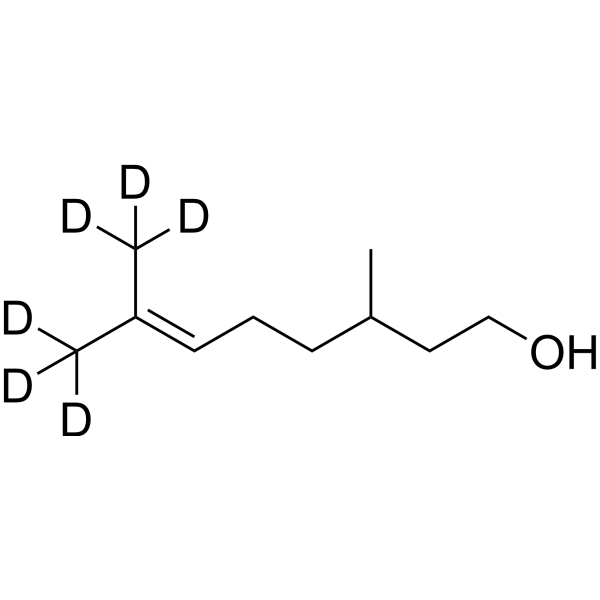 0 ImagesReferencia número: HY-W010201SNo. CAS: 220687-53-6Synonyms: (±)-Citronellol-d6; (±)-β-Citronellol-d6Citronellol-d6 is deuterated labeled Citronellol (HY-W010201). Citronellol ((±)-Citronellol) is an orally active inducer of apoptosis. Citronellol can prevent oxidative stress, mitochondrial dysfunction, and apoptosis in the SH-SY5Y cell Parkinson's disease model induced by 6-OHDA by regulating the ROS-NO, MAPK/ERK, and PI3K/Akt signaling pathways. Citronellol can induce necroptosis in human lung cancer cells through the TNF-α pathway and accumulation of ROS. Citronellol can reduce the levels of LC-3 and p62 to regulate the autophagy pathway, inhibit oxidative stress and neuroinflammation, and thus have neuroprotective effects on Parkinson's rats. Citronellol exhibits anti-fungal activity against Trichophyton rubrum by inhibiting ergosterol synthesis.
-
Antileishmanial agent-43
 0 ImagesReferencia número: HY-183621Antileishmanial agent-43 is a 3,4,5‑trisubstituted isoxazole with selective antileishmanial activity. Antileishmanial agent-43 shows IC50 values of 12.7 μM against Leishmania amazonensis promastigotes and 0.96 μM against intracellular amastigotes. Antileishmanial agent-43 induces ROS elevation, oxidative stress and mitochondrial dysfunction, resulting in lipid peroxidation, mitochondrial depolarization and ATP imbalance. Antileishmanial agent-43 causes cell shrinkage, phosphatidylserine externalization, plasma membrane permeabilization, and promotes autophagy. Antileishmanial agent-43 can be used for the research of leishmaniasis.
-
Gallic acid hydrate (Standard)
 0 ImagesSynonyms: 3,4,5-Trihydroxybenzoic acid hydrate (Standard)Gallic acid (hydrate) (Standard) is the analytical standard of Gallic acid (hydrate). This product is intended for research and analytical applications. Gallic acid (3,4,5-Trihydroxybenzoic acid) hydrate is a natural polyhydroxyphenolic compound and an free radical scavenger to inhibit cyclooxygenase-2 (COX-2). Gallic acid hydrate has various activities, such as antimicrobial, antioxidant, antimicrobial, anti-inflammatory, and anticance activities.
-
Chloranil (Standard)
 0 ImagesSynonyms: Tetrachloro-p-benzoquinone (Standard); TCBQ (Standard)Chloranil (Standard) is the analytical standard of Chloranil. This product is intended for research and analytical applications. Chloranil, an orally active metabolite of pentachlorophenol and hexachlorobenzene, is a widely used fungicide. Chloranil can induce ROS production. Chloranil induces neutrophil extracellular traps through the ROS-JNK-NOX2 pathway. Chloranil induces ferroptosis and neuroinflammation. Chloranil induces apoptosis of mouse embryonic stem cells.
-
Trimethylamine N-oxide dihydrate (Standard)
 0 ImagesReferencia número: HY-108915RNo. CAS: 62637-93-8Trimethylamine N-oxide (dihydrate) (Standard) is the analytical standard of Trimethylamine N-oxide (dihydrate). This product is intended for research and analytical applications. Trimethylamine N-oxide dihydrate is a gut microbe-dependent metabolite of dietary choline and other trimethylamine-containing nutrients. Trimethylamine N-oxide dihydrate induces inflammation by activating the ROS/NLRP3 inflammasome. Trimethylamine N-oxide dihydrate also accelerates fibroblast-myofibroblast differentiation and induces cardiac fibrosis by activating the TGF-β/smad2 signaling pathway.
-
Atiprimod hydrochloride
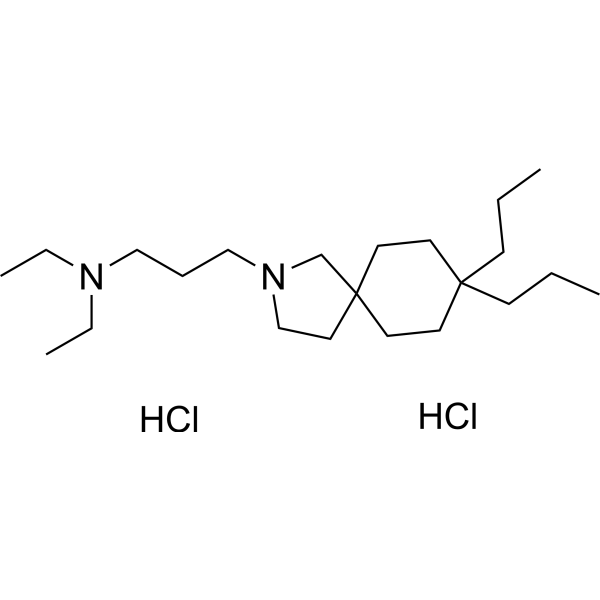 0 ImagesReferencia número: HY-110102No. CAS: 130065-61-1Synonyms: Azaspirane hydrochloride; SKF 106615-12 hydrochloride; SKF 106615Atiprimod (Azaspirane) hydrochloride is a STAT3 inhibitor with antitumor, anti-inflammatory, and anti-angiogenic activities. Atiprimod blocks the signaling pathways of IL-6 and VEGF by inhibiting the phosphorylation of signal transducer and activator of STAT3. Atiprimod blocks the JAK-STAT signaling pathway by inhibiting the phosphorylation of JAK2 and JAK3. Atiprimod also inhibits cell proliferation, induces cell cycle arrest, and induces autophagy and apoptosis. Atiprimod triggers persistent ER stress-mediated apoptosis in breast cancer cells by activating the PERK/eIF2α/ATF4/CHOP axis and inhibiting the nuclear translocation of STAT3/NF-κB. Atiprimod shows great anti-tumor activities in tumor xenograft mouse models. Atiprimod can be used for the study of pituitary adenoma, breast cancer, multiple myeloma and acute myeloid leukemia (AML).
-
(-)-Lyoniresinol
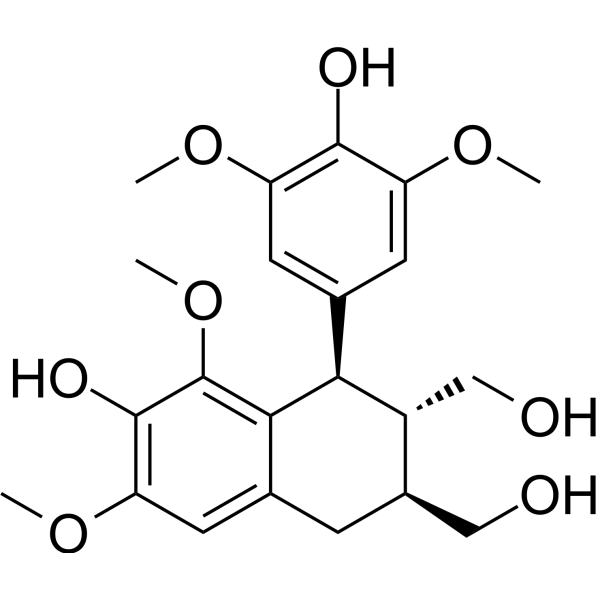 0 ImagesReferencia número: HY-N3349ANo. CAS: 31768-94-2(-)-Lyoniresinol is a lignan isolated from the Tarenna attenuata with antioxidant activities. (-)-Lyoniresinol has radical scavenging activities against DPPH with an IC50 of 82.4 μM.
-
Vanillyl alcohol (Standard)
 0 ImagesSynonyms: p-(Hydroxymethyl)guaiacol (Standard)Vanillyl alcohol (Standard) is the analytical standard of Vanillyl alcohol (HY-N2067). This product is intended for research and analytical applications. Vanillyl alcohol (p-(Hydroxymethyl)guaiacol) is an orally active phenolic alcohol. Vanillyl alcohol reduces ROS generation. suppresses Bax, increases Bcl-2. Vanillyl alcohol has anti-angiogenic, anti-inflammatory, anti-nociceptive and neuroprotective effects. Vanillyl alcohol is used as a flavoring agent in foods and beverages.
-
LY231617 (Standard)
 0 ImagesReferencia número: HY-103253RNo. CAS: 141545-89-3LY231617 (Standard) is the analytical standard of LY231617 (HY-103253). This product is intended for research and analytical applications. LY231617 is a potent and blood-brain barrier penetrable antioxidant. LY231617 is a neuroprotective agent in brain, it can be used for the research of nervous disease.
-
Propiconazole-d7
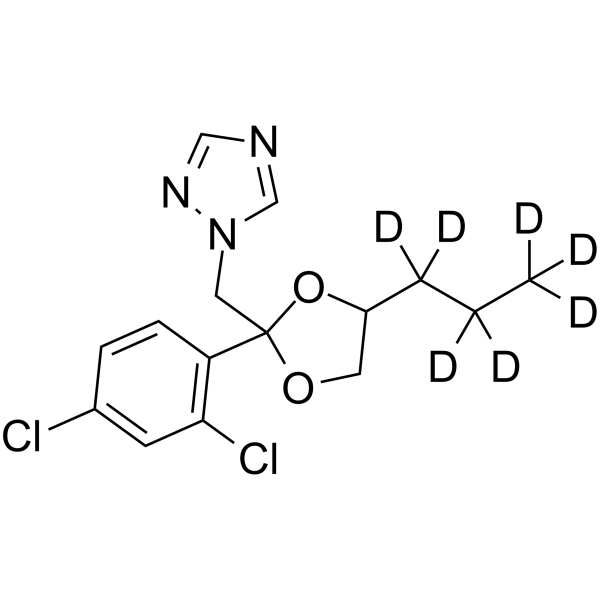 0 ImagesReferencia número: HY-B0847SNo. CAS: 1246818-14-3Propiconazole-d7 is the deuterium labeled Propiconazole. Propiconazole is a broad-spectrum triazole fungicide that inhibits the conversion of lanosterol to ergosterol, leading to fungal cell membrane disruption. Propiconazole inhibits S. cerevisiae, but not rat liver, microsomal cytochrome P450 (IC50s=0.04 and >200 μM, respectively). Propiconazole inhibits the growth of T. deformans and R. stolonifer (ED50s=0.073 and 4.6 μg/mL, respectively). Propiconazole increases production of reactive oxygen species (ROS).
-
3',4'-Dimethoxyflavone (Standard)
 0 Images3',4'-Dimethoxyflavone is a lipophilic flavone, can be isolated from the leaves of Primula veris. 3',4'-Dimethoxyflavone can reduce the synthesis and accumulation of PARP and protect cortical neurones against cell death induced by Parthanatos. 3',4'-Dimethoxyflavone is also an aryl hydrocarbon receptor antagonist in human breast cancer cells. 3',4'-Dimethoxyflavone can promote the proliferation of human hematopoietic stem cells. 3',4'-Dimethoxyflavone has various biological activities, including antioxidant, anti-cancer, anti-inflammatory, anti-atherogenic, hypolipidaemic, and neuroprotective or neurotrophic effects.
-
U-78517
 0 ImagesReferencia número: HY-164295No. CAS: 122003-11-6U-78517 is a potent antioxidant. U-78517 effectively inhibits DCVC-induced lipid peroxidation.
-
(+)-Columbianetin (Standard)
 0 Images(+)-Columbianetin (Standard) is the analytical standard of (+)-Columbianetin (HY-N0363). This product is intended for research and analytical applications. (+)-Columbianetin ((S)-Columbianetin) acts as an inhibitor of JNK/ERK. (+)-Columbianetin inhibits UVA-induced phosphorylation of JNK and ERK, reduces the production of MMP-1, reverses UVA-induced Collagen (HY-NP003) degradation, and alleviates UVA-mediated inhibition of Smad2/3 phosphorylation and translocation. (+)-Columbianetin regulates the AP-1 and ASK1-MAPK signaling pathways, inhibits the production of ROS and blocks sub-G1 cell cycle arrest. (+)-Columbianetin is applicable to research related to skin aging.
-
Antibacterial agent 318
 0 ImagesReferencia número: HY-181075Antibacterial agent 318 is an antibacterial agent that binds to bacterial DNA, blocks its replication, and forms supramolecular complexes. Antibacterial agent 318 acts as an oxidative stress inducer, elevating intracellular reactive oxygen species (ROS) levels, oxidizing glutathione (GSH) to glutathione disulfide (GSSG), depleting cellular GSH reserves, and inducing bacterial cell death through oxidative damage. Antibacterial agent 318 disrupts the bacterial cell membrane and reduces bacterial metabolic activity. Antibacterial agent 318 exhibits rapid bactericidal activity, inhibits bacterial biofilm formation, and displays minimal cytotoxicity toward non-cancerous mammalian cells. Antibacterial agent 318 is applicable in research on drug-resistant bacterial infections.
-
Arecaidine-propargyl ester
 0 ImagesReferencia número: HY-183853No. CAS: 35516-99-5Arecaidine-propargyl ester is a selective M2 muscarinic receptor agonist with blood-brain barrier permeability, with a pKi of 5.91 for hm1, 7.06 for hm2, 6.07 for hm3, 6.01 for hm4, and 6.03 for hm5. Arecaidine-propargyl ester stimulates central and peripheral muscarinic receptors. Arecaidine-propargyl ester increases intracellular ROS, induces DNA damage and Apoptosis, and upregulates the expression of MnSOD and SIRT1. Arecaidine-propargyl ester reduces sympathetic nerve outflow, induces dose-dependent hypotension, and triggers negative chronotropic effects at high peripheral doses. Arecaidine-propargyl ester can be used in research related to Alzheimer's disease and glioblastoma.
-
4-Vinylcyclohexene dioxide (Standard)
 0 ImagesSynonyms: Vinylcyclohexene diepoxide (Standard)4-Vinylcyclohexene dioxide (Standard) is the analytical standard of 4-Vinylcyclohexene dioxide (HY-106591A). This product is intended for research and analytical applications. 4-Vinylcyclohexene dioxide (4-Vinylcyclohexene diepoxide) is an orally active metabolite of 4-vinylcyclohexene. 4-Vinylcyclohexene dioxide induces Apoptosis, increases intracellular ROS, and activates the PI3K/Akt/mTOR pathway. 4-Vinylcyclohexene dioxide selectively damages small ovarian follicles, inhibits granulosa cell function, and disrupts the male reproductive system. 4-Vinylcyclohexene dioxide can be used in the study of premature ovarian insufficiency, reproductive toxicity, and related fertility disorders.
-
Y-27632 (Standard)
 0 ImagesY-27632 (Standard) is the analytical standard of Y-27632 (HY-10071). This product is intended for research and analytical applications. Y-27632 is a ROCK inhibitor with Ki values of 220 nM and 300 nM for ROCK1 and ROCK2, respectively. Y-27632 exerts anti-inflammatory and immunomodulatory effects in systemic lupus erythematosus models by inhibiting the ROCK/NF-κB pathway. Y-27632 enhances autophagy by inhibiting the AKT/mTOR pathway, thereby inducing apoptosis apoptosis in oral squamous cell carcinoma. Y-27632 induces the formation of tunneling nanotubes in ARPE-19 cells and significantly enhances mitochondrial transfer through these channels. Y-27632 promotes neurite outgrowth in PC12 cells by activating the Rac1/NOX1/ROS/AKT/PAK1 signaling cascade.
-
Soyasaponin Bb (Standard)
 0 ImagesReferencia número: HY-N0310RNo. CAS: 51330-27-9Soyasaponin Bb (Standard) is the analytical standard of Soyasaponin Bb (HY-N0310). This product is intended for research and analytical applications. Soyasaponin Bb is an orally active, covalent inducer of heme oxygenase HO-1 and an inhibitor of aldose reductase AKR1B1. Soyasaponin Bb can regulate oxidative stress pathways, enhance antioxidant capacity, reduce reactive oxygen species (ROS) generation, and inhibit lipid peroxidation and hepatocyte apoptosis. Soyasaponin Bb improves alcohol-induced hepatocyte membrane damage and liver function abnormalities, and improves Scopolamine (HY-N0296)-induced memory impairment. Soyasaponin Bb has antioxidant, hepatoprotective, and neuroprotective activities.
-
Quinocetone (Standard)
 0 ImagesReferencia número: HY-123581RNo. CAS: 81810-66-4Quinocetone (Standard) is the analytical standard of Quinocetone (HY-123581). This product is used for research and analytical purposes. Quinocetone is an orally active animal feed additive used to increase the meat production of livestock and poultry. Quinocetone exhibits antibacterial activity against a variety of pathogenic microorganisms. Quinocetone exhibits tissue-specific (liver, lymphocyte) toxicity. Quinocetone induces autophagy in cells through the ATF6/DAPK1 pathway. Quinocetone activates the NF-κB and iNOS pathways, leading to cell apoptosis, hepatocyte vacuolar degeneration and fibrosis. Quinocetone can inhibit Nrf2/HO-1 and induce the generation of reactive oxygen species (ROS), leading to oxidative stress and DNA damage.
-
O-1663
 0 ImagesReferencia número: HY-114802No. CAS: 468083-84-3O-1663 is a full agonist of cannabinoid receptor 2 (CB2 receptor). O-1663 stimulates the production of ROS, downregulates Id1, and induces autophagy and apoptosis in breast cancer cells. O-1663 inhibits the proliferation, invasion and metastasis of breast cancer cells. O-1663 prolongs the survival of models with advanced metastatic breast cancer. O-1663 can be used for the research of metastatic breast cancer.




